The Life And Lives Of Banni
It was February 2014, and winter had begun to fade in Banni. We moved through the rocky tracts of Kutchh, small undulating hills dotted with sparse clumps of euphorbia. The only other green came from patches of the invasive plant Neltuma juliflora, interspersed with small farms. The bumpy ride over the bending roads of the rocky expanse suddenly softened as I entered a flat stretch, the vehicle gliding through a landscape that seemed to hold its breath.
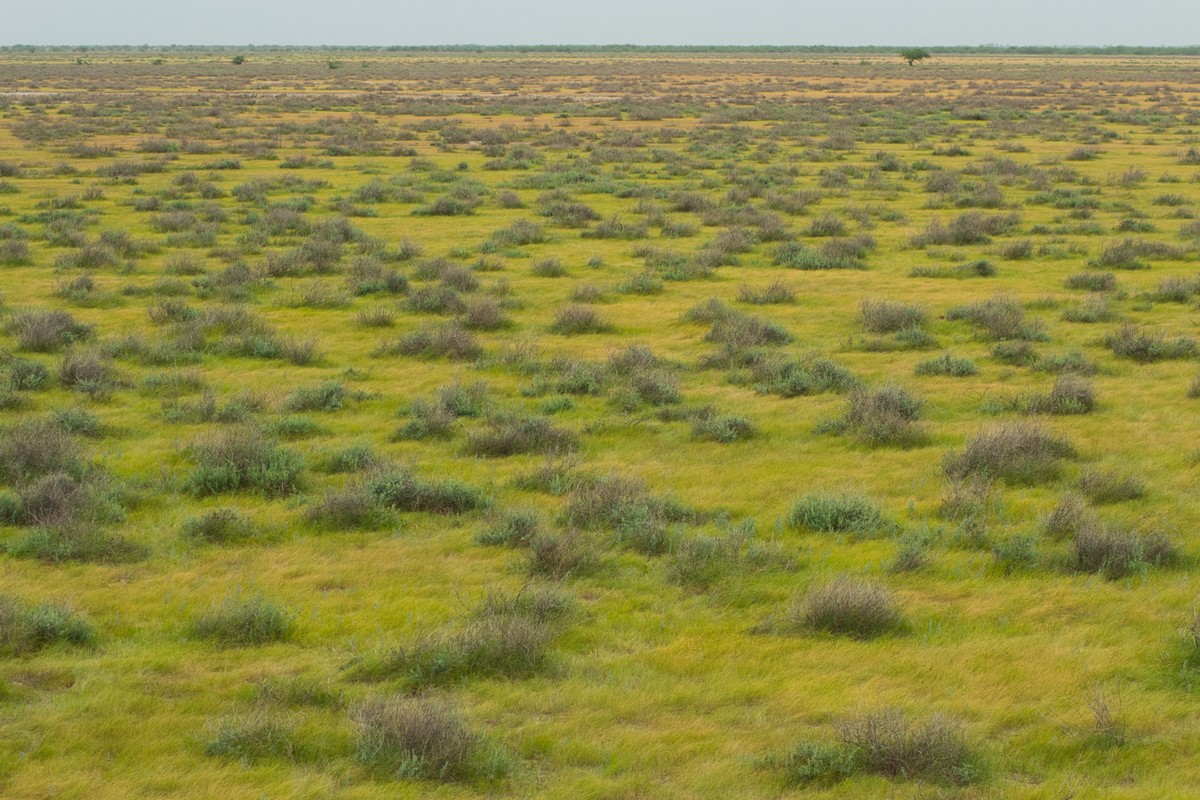
Banni’s expansive plains may be misunderstood as barren ‘wastelands’, but in truth these grasslands form finely tuned Open Natural Ecosystems (ONEs) shaped by weather, wind, water, seasons, and geography. Photo: Dr. Chetan Misher.
At first glance, Banni did not demand attention. To a passing traveller, it can feel empty. Many visitors know it only as the edge of the White Rann, where the famous white desert festival is held. But Banni is much more than that; it just doesn’t show itself on demand, much like an introvert. It reveals itself only to those willing to stay. I had arrived for my Master’s project. The plan was to stay for a few months. Those months quietly turned into years, and years into nearly a decade.
As February nears its end, waterbodies begin to shrink, and grasses shed their green. As March approaches, the land appears to slip into a deep sleep. Within a few weeks, temperatures rise sharply. What starts as dust veils grow into powerful sandstorms by April and May. When the air finally settles, the land is rearranged. Fine sand, lifted and carried by wind, gathers against small shrubs, forming delicate bunds covering the vast land. The saline soil creates the illusion of water in the distance, shimmering under heat, though there may be no water for kilometres. Even as the ground hardens, temperatures soar and visibility blurs, life in Banni grasslands continues – mostly unseen. It thrives beneath the surface, inside burrows, and in the narrow windows of dawn and dusk, invisible to the hurried or unfamiliar eye.

Hurried eyes have long misread such a landscape as ‘wasteland’, mistaking invisible life for absence. That label justified a series of interventions that slowly eroded these ecosystems – not through sudden destruction, but through death by a thousand cuts. Lack of tree canopies is often associated with degradation, yet what seems barren is often a finely tuned system shaped by water, wind, and seasonal pulse. Banni is one such landscape.
At first glance, Banni did not demand attention. To a passing traveller, it can feel empty. But it is much more; it just doesn’t show itself on demand. It reveals itself only to those willing to stay.